
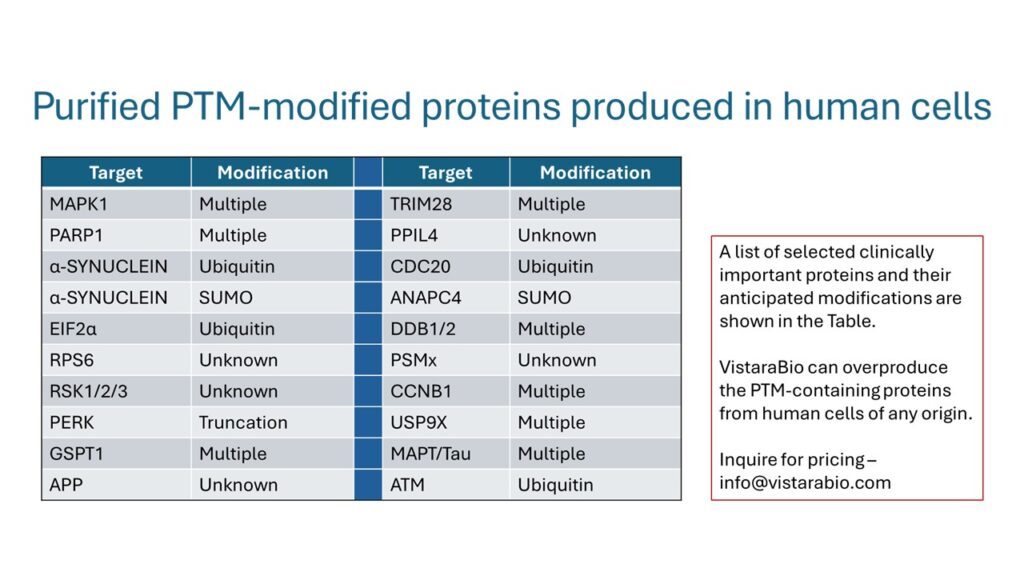
VistaraBio markets purified PTM-containing proteins overproduced in human cells. Over 5,000 PTM containing isoforms of more than 1,500 proteins are currently available. A sample listing is shown in the above table. In more than 50% of the cases the modification and the site of the PTM are known. The remaining are undescribed in literature. Phosphorylation and ubiquitination are the most frequently observed modifications. Additional modifications include acetylation, methylation, ADP-ribosylation, glycosylation, and SUMOylation.
VistaraBio also offers a cell-based PTM profiling system for PTMs in diseased states or in response to therapeutic interventions.
Peptide therapeutics is in the horizon for VistaraBio!
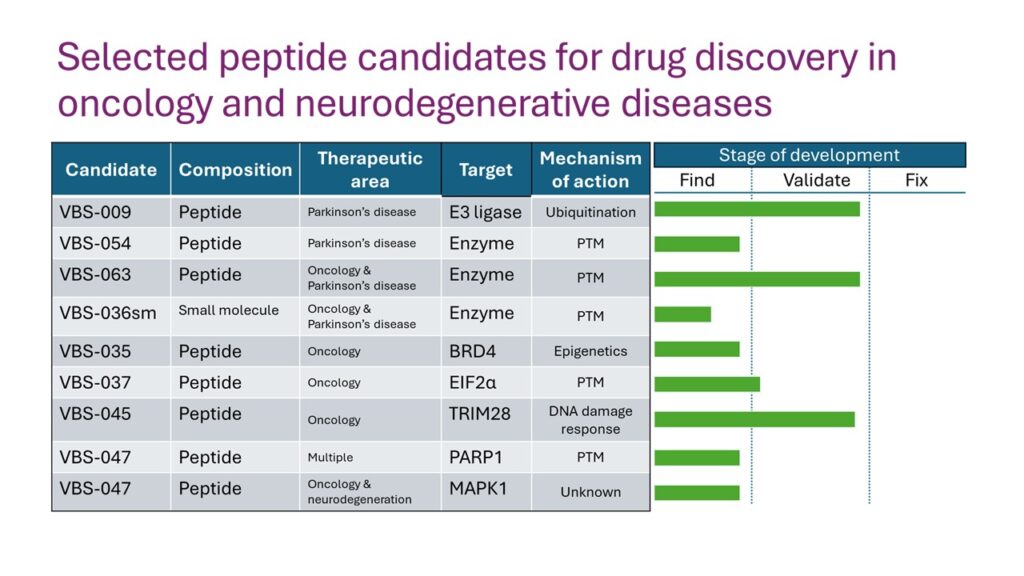
VistaraBio is actively pursuing applying its proprietary bioactive peptides for clinical benefit in oncology and neurodegenerative diseases. The peptides’ mechanism of action is unique – they modify the clinical target via ‘innate proximity’ – which is distinct from ‘induced proximity’ with degraders. So, the peptides work by restoring normal function of the target, rather than via inhibition or degradation.
Initial screens have identified several candidates. The table below shows a sample of the enlisted candidates. In addition, ‘motif’-based targeting of cohorts of proteins is being investigated by VistaraBio which are designed to work via restoration of multiple proteins which collaborate in pathways, particularly those which are dysregulated in disease.
VistaraBio is employing PINTAC technology for determining the substrates of E3 ligases. In initial POC, the substrate repertoires of several E3 ligases have been determined, including, cereblon, ANAPC, RNF8, Siah1, XIAP, TRIM28, and CTLH. The data from these projects are available for collaboration or partnering. VistaraBio is developing a range of products and services based on its determination of cereblon’s natural substrates and neosubstrates.